
Breeding Bird Mapping in Solar Parks: How Can Innovative, AI-Powered Technology Simplify Wildlife Assessments?
The energy transition is progressing rapidly. In Germany alone, according to the amended Renewable Energy Act (2023), approximately 22 gigawatts of new photovoltaic capacity are to be installed annually by 2030—requiring more than 20,000 hectares of land. Large-scale ground-mounted PV systems therefore play a particularly important role in making our energy supply more sustainable. With appropriate site selection, design, and maintenance, these solar parks can also contribute significantly to biodiversity conservation—ensuring that climate and nature protection go hand in hand.
Why Wildlife Assessments Are Required for Solar Parks
The construction of new solar parks leads to noticeable changes in the landscape and thus directly impacts biodiversity. The German Federal Nature Conservation Act (§§13-15 BNatSchG) requires an environmental impact assessment and a nature conservation evaluation of any intervention. Particular attention is given to threatened ground-nesting birds such as the skylark or the lapwing, which depend on open and structurally diverse habitats. If protected or particularly sensitive bird species are likely to be present in or near the planned solar park area, a breeding bird survey is usually required. This survey is part of the species protection assessment and serves to avoid violations of the BNatSchG and to plan any necessary mitigation or compensation measures.
Traditional Breeding Bird Surveys Often Lead to Bottlenecks
Conventional wildlife assessments, especially breeding bird surveys, are typically conducted through manual field visits. Experts carry out multiple visual and acoustic observations during the breeding season and document their findings in a final report. The goal is to record all breeding bird species and their territories. While this method is well-established in cooperation with regulatory authorities, it comes with several challenges:
- 💰 High cost and effort: Requires many hours of manual fieldwork over several visits.
- 🔎 Subjective assessment: Results are highly dependent on the experience of the observers and based on sporadic sightings.
- 🦥 Low scalability: Large solar parks or multiple sites are difficult to manage. A shortage of available experts can also delay project timelines.
- ⚠️ Disturbance risk: Frequent on-site presence can disturb sensitive species.
How Automated Biodiversity Monitoring Simplifies the Process
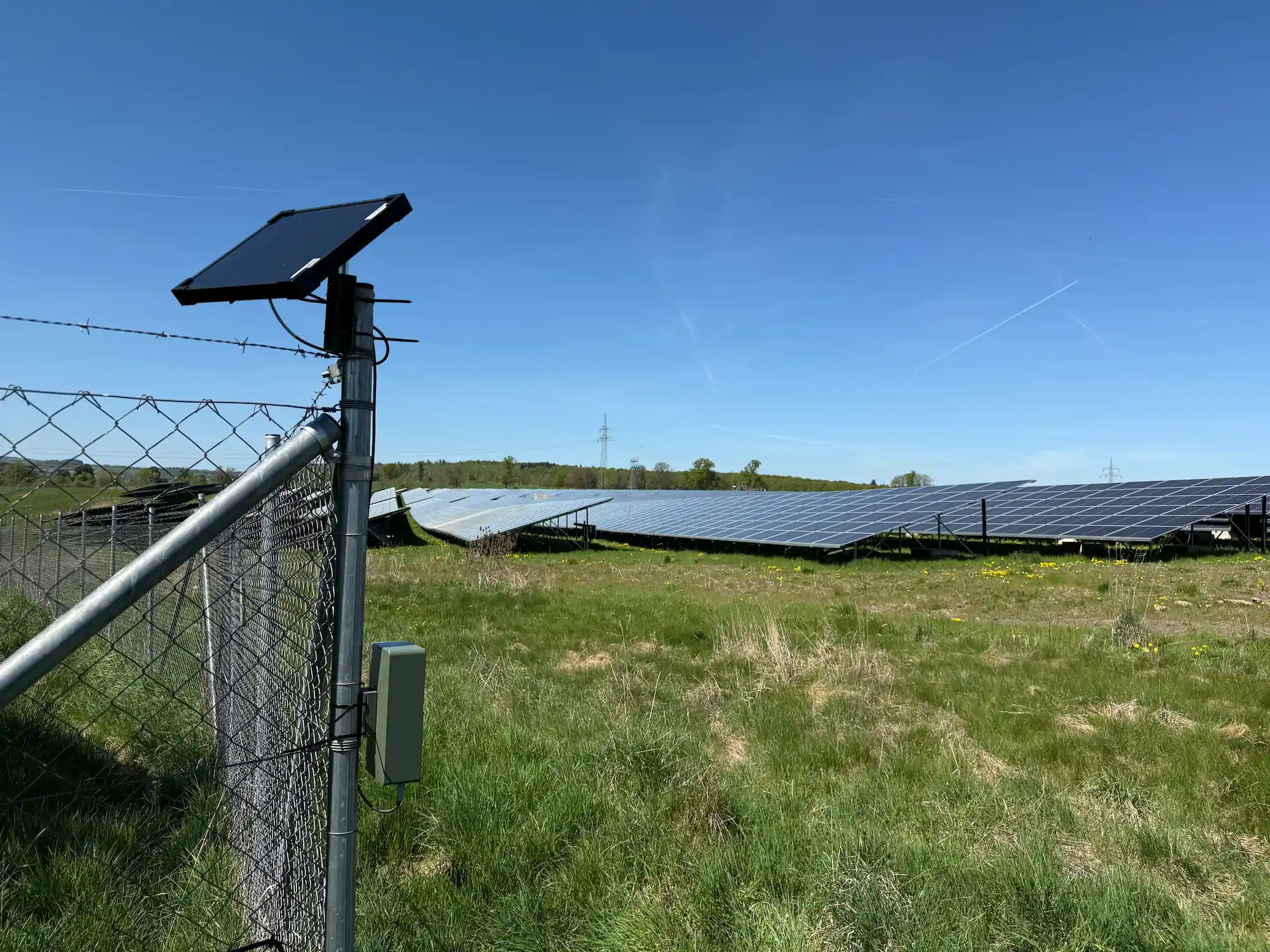
Technological innovations can help overcome the limitations of traditional surveys. Modern IoT devices can continuously capture animal sounds in the solar park throughout the year. These audio recordings are automatically analyzed using artificial intelligence to reliably identify bird species. A grid-like placement of the devices also enables precise territory mapping and identification of nesting locations. Compared to traditional methods, automated monitoring offers numerous advantages:
- 💸 Lower cost and effort: Avoids expensive field visits and consulting fees.
- 🛰️ Objective assessment: High comparability of results thanks to standardized technology and abundant data. Consistent data collection throughout the day and across the year.
- 📈 High scalability: Data is available as interactive maps and reports—always up to date and fully traceable.
- ✅ Minimal intrusion: After initial deployment, no further on-site intervention is needed. The sensors are solar-powered and transmit data automatically via cellular networks.
Bioacoustic Technology Is Already in Use
In spring 2025, we at Hula Earth, in collaboration with Enerparc AG, launched a pilot project for automated breeding bird mapping at the Lauterbach solar park in Hesse. Nineteen BioT sensors from Hula Earth were installed across Enerparc's 55 MWp ground-mounted PV system to conduct comprehensive acoustic biodiversity monitoring. The goal of the project is to identify species present, breeding populations, and activity hotspots. The results allow Enerparc to actively incorporate real-time data into solar park maintenance and cooperation with local authorities. The combination of bioacoustics and artificial intelligence holds significant potential to make breeding bird mapping more affordable, comparable, scalable, and environmentally friendly in the future. Want to learn more about how automated biodiversity monitoring can simplify your projects?