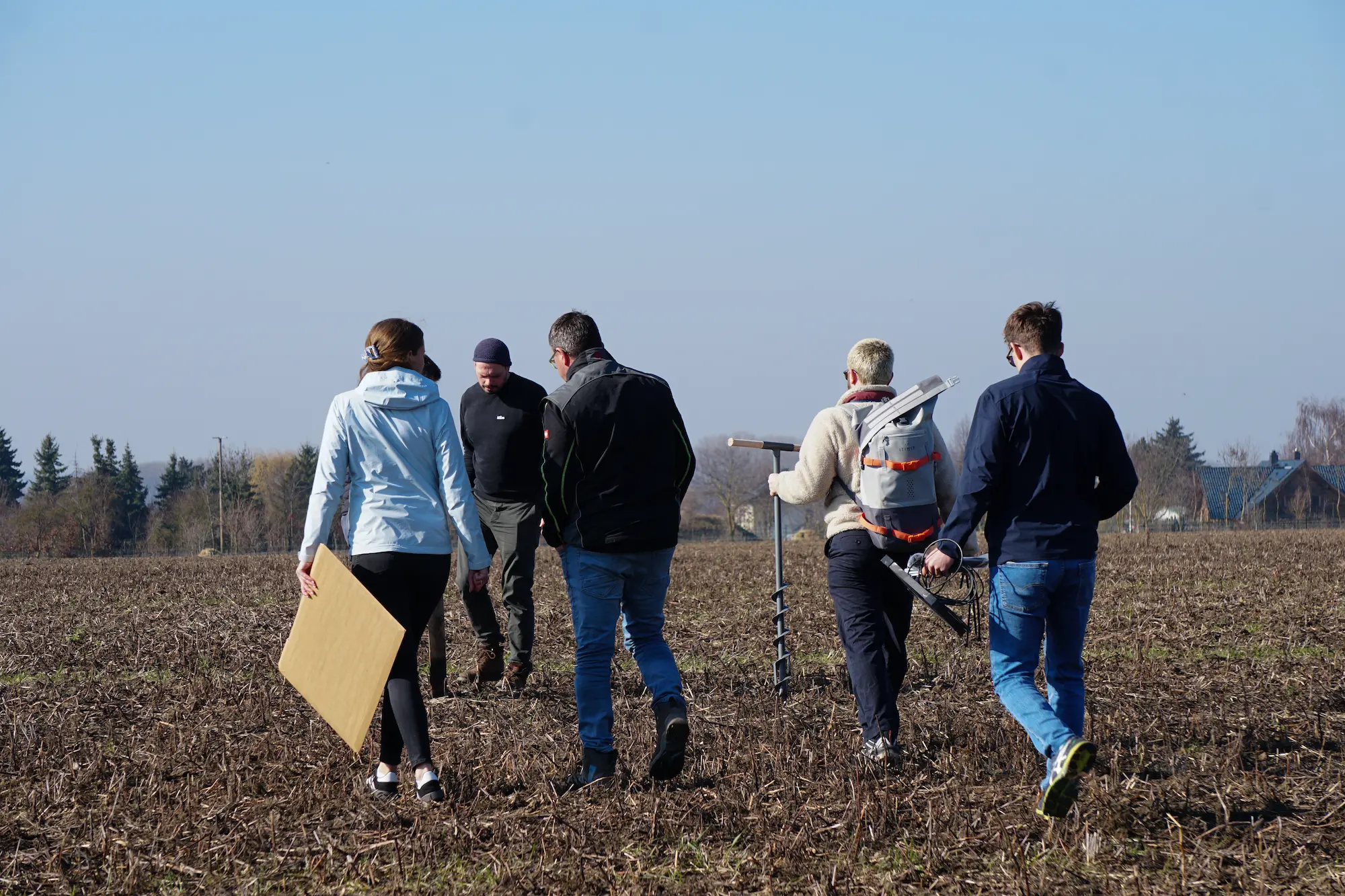
Photo: Insa Schüssler | Installation of BioT sensors on a farm in Saxony-Anhalt

Making Biodiversity Measurable: DKB, Klim, and Hula Earth Launch Second Project Year
Biodiversity is far more than just an ecological buzzword—it is rapidly becoming a key sustainability factor for modern agriculture. For banks and stakeholders along the agricultural value chain, preserving biodiversity represents both an enormous opportunity and a way to strengthen resilience.
In a collaboration between DKB, Klim, and Hula Earth**, the project to measure biodiversity is now entering its second phase to transform theory into robust data.
Why Biodiversity is Essential for Agriculture
The productivity of an ecosystem is directly linked to its functional biodiversity. High biodiversity ensures ecological stability, which can secure stable yields and the longevity of agricultural operations in the long term.
Until now, targeted support has often failed due to a lack of measurability: While action-based incentives (e.g., creating wildflower strips) are widespread, there is a lack of reliable systems for outcome-based payments. This is precisely where the joint project comes in.
High-Tech in Action: The Hula BioT Sensors
In Brandenburg and Saxony-Anhalt, biodiversity is being measured under real-world conditions. At the heart of the analysis are the BioT sensors from Hula Earth, which are installed on the project sites:
- Acoustic monitoring: The BioT sensors record animal sounds. An integrated AI identifies birds, mammals, amphibians, and insects.
- Microclimate data: Temperature, humidity, CO2 levels, and air pressure are recorded simultaneously—valuable data for local farm management.
- Real-time transmission: All information is immediately transmitted to the Hula Earth platform and analyzed there.
Field Trial in Saxony-Anhalt
A key site for the project is located on an agricultural trial plot in Saxony-Anhalt. Across 20 hectares, researchers are studying how different farming practices affect biodiversity under real-world conditions.
The area is divided into three comparable sub-plots for this purpose:
- Reference plot: conventional farming
- Insecticide reduction: targeted reduction in the use of insecticides
- Insecticide-free: complete elimination of insecticides to promote insects and beneficial organisms
Comparing these farming methods makes it possible to analyze the impact of different intensities on biodiversity.
The Goal: Biodiversity as a Measurable KPI
The project pursues a clear vision for the future of regenerative agriculture:
- Knowledge transfer: Understanding which farming practices actually promote biodiversity.
- KPI development: Establishing biodiversity as a measurable metric for sustainability reports and financing.
- Incentive systems: Enabling the transition from flat-rate payments to performance-based compensation for farmers.
By combining agricultural financing (DKB), expertise in regenerative agriculture (Klim), and innovative biodiversity measurement technology (Hula Earth), the foundation is laid for an agricultural sector in which ecological added value can also be financially rewarded.