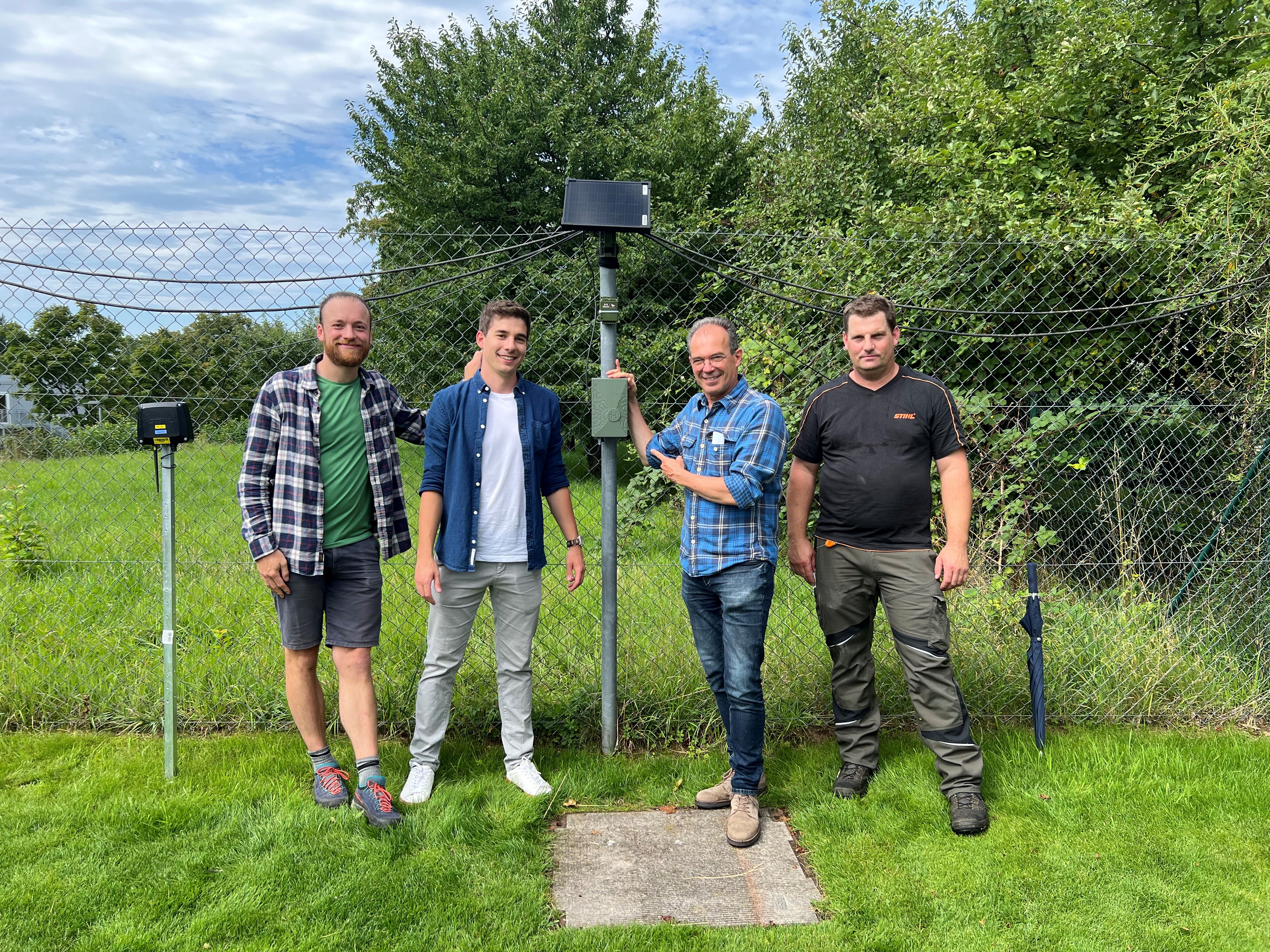
From left to right: Timo Erdelt (Hula Earth), Florian Geiser (Hula Earth), Vice President of Sustainability at STIHL Dr. Friedemann Stock

From Grey Infrastructure to Green Strategy
Urbanisation is accelerating worldwide. Cities expand, industrial sites grow, and with every new building, road, or parking area, urban ecosystems are placed under pressure. The result is a gradual but persistent degradation of ecological functions in areas that are already highly modified by human activity. Yet these same urban and industrial spaces are becoming increasingly important for biodiversity, climate resilience, and regulatory compliance.
Managing urban industrial ecosystems is therefore no longer a “nice to have.” It is a strategic necessity.
Why Industrial Urban Ecosystems Matter
Urban ecosystems provide a range of ecosystem services that are often underestimated in industrial environments.
Natural thermoregulation and energy efficiency: Vegetation reduces the Urban Heat Island effect, provides shade, and acts as windbreaks, improving energy efficiency across industrial sites.
Air quality and bio-filtering: Plants trap dust and heavy metals, improve air quality, and contribute to carbon sequestration, supporting climate and health objectives.
Water retention and stormwater management: Vegetated areas slow runoff, enhance infiltration, and naturally filter water, reducing flood risk and pressure on drainage infrastructure.
Noise reduction and employee wellbeing: Green walls and vegetated buffers reduce noise pollution while improving working conditions in dense or industrial settings.
Regulatory compliance and financial relevance: Biodiversity is increasingly material for ESG reporting. Demonstrating ecological corridors and functioning habitats supports regulatory compliance and, under frameworks such as the EU Taxonomy for sustainable activities, can reduce perceived transition risk and financing costs.
How Industrial Urban Ecosystems Can Be Managed
Effective ecosystem management can start with incremental measures and does not require a complete site redesign.
Low-threshold entry measures: Bird boxes, native flowering plants, and shrubs beneath existing trees already increase habitat complexity and nesting opportunities.
Structural diversification: Multiple vegetation layers create more ecological niches and support higher species diversity.
Advanced ecological design approaches: Animal-aided design integrates biodiversity into infrastructure, for example through native hedgerows or ecological site boundaries.
Extensive and semi-natural areas: Non-mowed meadows or orchard meadows can replace intensively managed lawns, improving habitat quality with lower maintenance.
A unifying principle: Diversity in vegetation structure consistently leads to more resilient ecosystems.
The remaining challenge: Without continuous and precise monitoring, it remains unclear which measures deliver real ecological impact and how to transparently show ecological improvements at scale.
Case Study: Biodiversity Monitoring at STIHL
STIHL has been implementing biodiversity measures across its industrial sites for some time. The central challenge was not commitment, but insight. The company sought to understand which measures were effective, how biodiversity differed across site management zones, and how investments could be optimised.
Hula launched a pilot project with STIHL on a 20-hectare industrial production site with existing environmental interventions. Two BioT sensors were deployed to establish a baseline and compare species presence across differently managed and highly urbanised areas, fully automated.
Results and Action
During the monitoring period from August until November 2025, 49 bird species were detected on site. Clear differences emerged between ecological management zones and heavily sealed or urbanised areas such as parking spaces, demonstrating the direct impact of site management decisions on biodiversity outcomes.
More importantly, the data enabled adaptive and efficient management, especially for future environmental management projects. Biodiversity performance across management zones became transparent, allowing STIHL to prioritise measures with the highest ecological return and adjust interventions over time if necessary.
This will ensure that resources are invested where they deliver the greatest impact, maximising both ecological outcomes and cost efficiency.
Reliable, site-specific biodiversity data also strengthened ESG reporting and supported alignment with EU Taxonomy criteria. By reducing uncertainty around biodiversity performance and transition risks, the monitoring approach opens pathways toward improved risk assessments and potential access to more favourable financing conditions.
The success of the pilot led to a rollout across further Stihl sites, including Brazil and Austria, scaling the benefits of transparent, comparable, and actionable biodiversity data.
These result oriented insights will enable us to compare company locations globally and set real biodiversity targets that we can transparently work towards. Something we did not anticipate: the excitement and engagement of our employees following the journey.
~Dr. Friedemann Stock, Vice President of Sustainability at STIHL
A Blueprint for Industrial Urban Biodiversity
This case shows that industrial urban ecosystems can be actively managed rather than passively maintained. Continuous monitoring enables evidence-based decisions, adaptive management, and efficient allocation of capital, creating measurable value for biodiversity while supporting regulatory compliance and financial resilience.